
Tales of Nature
Artworks which illustrate our relationships with Wildlife, Nature and Earth’s resources.
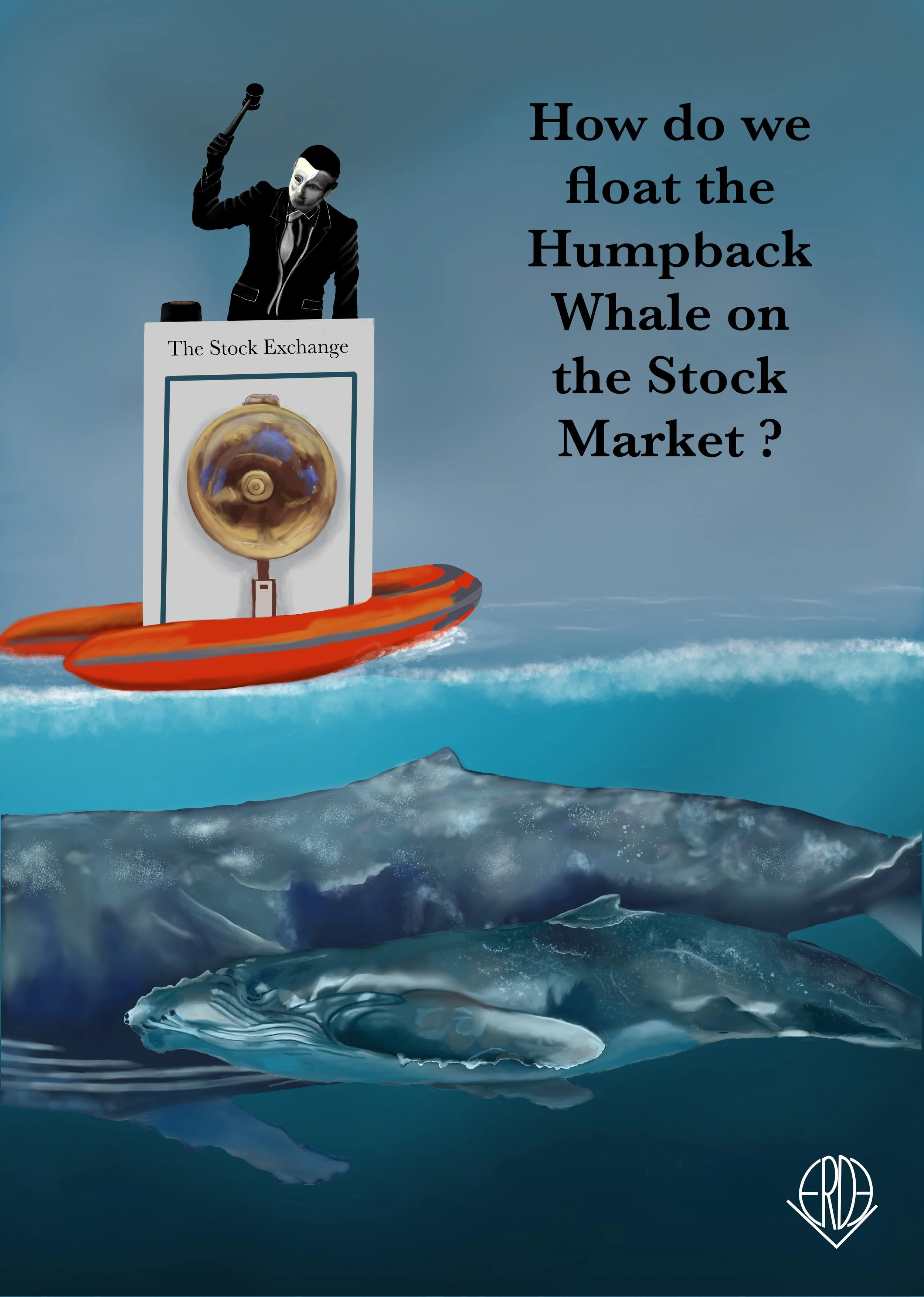
Whales and Carbon Capture
In this report the IMF estimated that when a single Great Whale dies and sinks to the bottom of the ocean; it takes with it 33 tons of sequestered CO2 to the ocean depths.
Combine this with a lifetime contribution to Ocean ecosystems; the Carbon Capture value of a single Great Whale is estimated at more than $2 million. The global Great Whale population today is valued at $1 trillion worth of Carbon Capture.
Current stocks of Great Whales are now thought to be around only 10% of pre- industrialised Whaling.
With careful Ocean stewardship Great Whale population numbers can recover increasing their Carbon Capture potential.
The International Monetary Fund environment report of 2021
So instead of building expensive land based Carbon Capture machines, the challenge for economists and world markets is how to capitalise on this climate change solution?
It’s just a question of investment.
Ghost Fishing
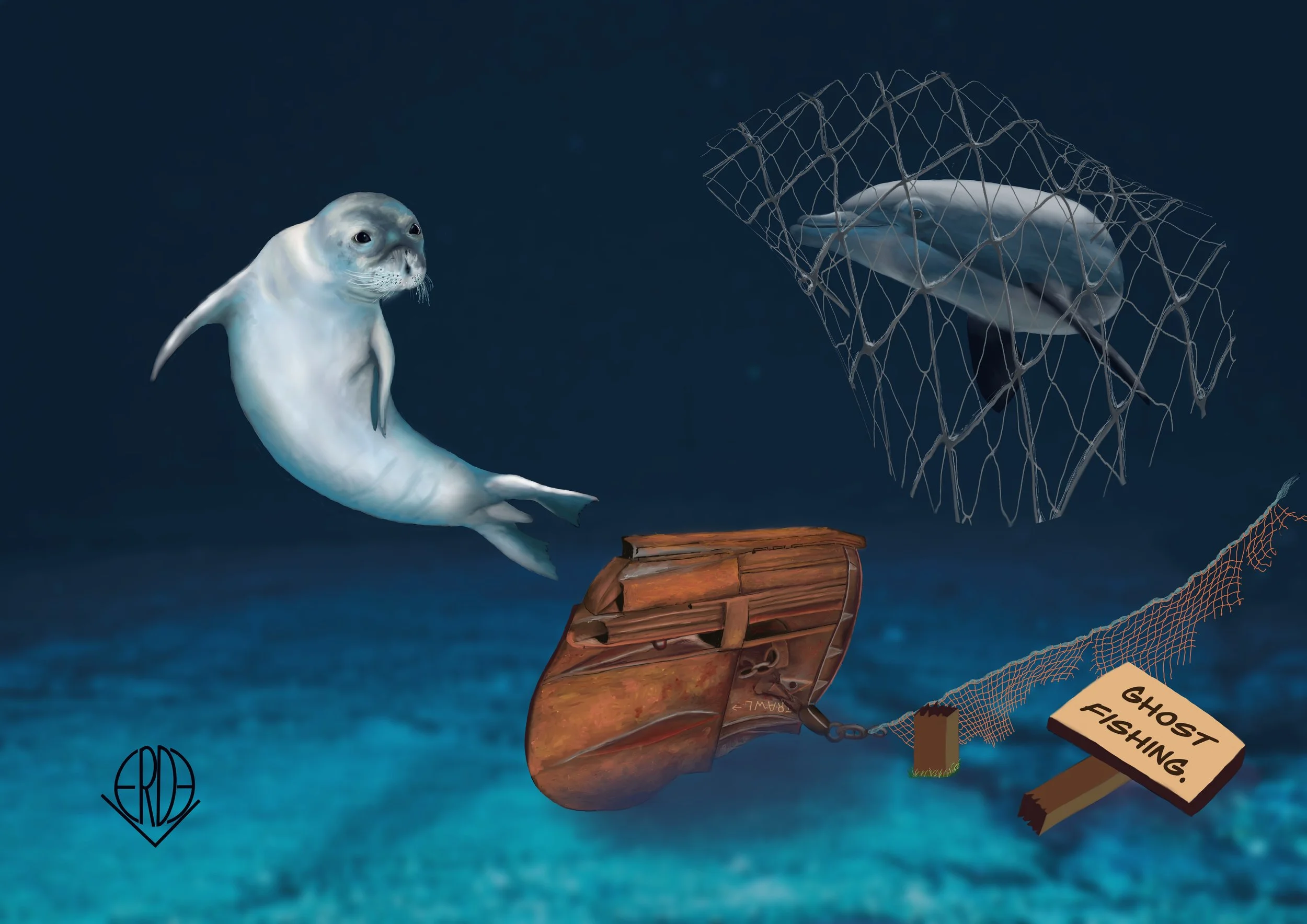
Between 500,000 and 1 million tons of fishing gear are lost or discarded in the oceans worldwide each year. Marine mammals like dolphins get entangled in these discarded nets, lines and ropes - a painful death is inevitable.
They call it Ghost Fishing.
How can we recover and/or redesign commercial fishing gear to reduce the burden placed on our oceans worldwide ?
Ghost fishing hastens the collapse of world fish stocks - already in decline - and degrades the ecosystems which support them.