This is an extract from the Cetacean vision portfolio (CET VIS 1 shape recognition).
Shape recognition is an essential part of human learning; and is one of the first visual skills we learn as a young baby. When repeatedly shown pictures of a cow, encouraged to say “Cow” and make a moo sound a baby will store away recognition, of this yet to be experienced animal, deep inside its’ developing brain.
Later, seeing a cow in real life brings additional understanding of the movements and behaviours of a cow to complement this stored image reinforced by these direct visual observations. As our brains develop understanding becomes more sophisticated allowing us to recognise a multitude of images, carrying associated memories. Shape recognition now triggers a more nuanced understanding of what we are seeing.
We know that Cetacean offspring spend a long period of time in close proximity to their parents and other adults in their pod. Do they go through a similar learning process to ourselves. Can they recognise shapes, communicate their meaning to each other? and thereby make sense of their world through the eyes of an adult whale.
CET VIS 1 shape recognition exercise ‘the hidden seal illusion’ (see below)
When I first created this artwork someone asked me ‘why have you drawn a hidden seal? If you look closely you can probably see it for yourself.
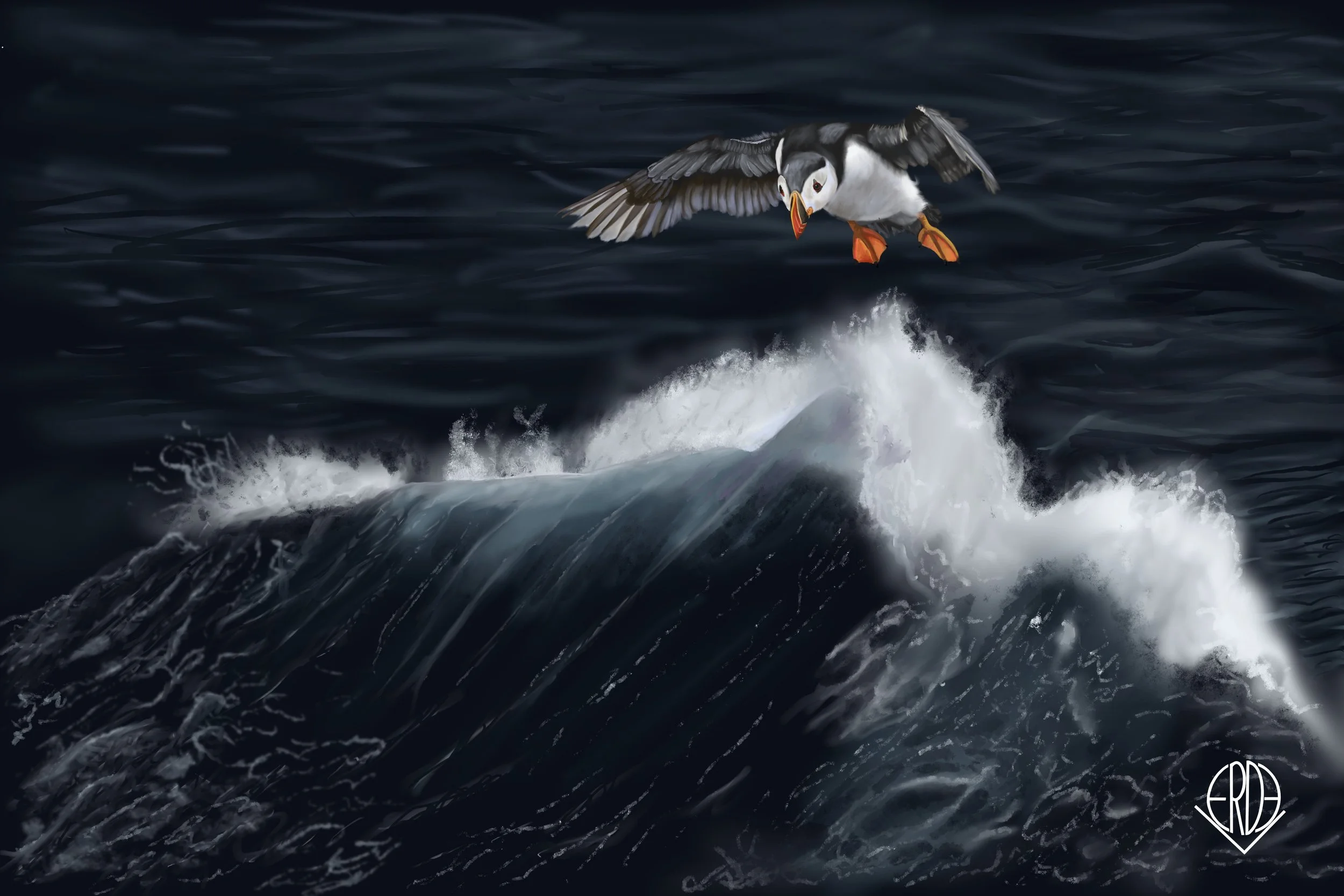
The head of a seal appears hidden in the wave just below the puffin looking curiously on. Yet it is nothing more than a vague shape which we recognise due to the context in which we see it, and in our ‘minds eye’ we fill in the gaps to convince ourselves that a seal is actually there. The artwork shows how we identify shapes, we make sense of these shapes and create a meaningful understanding of what we see. It may be an illusion, but it invites a story to be told fuelled by our curiosity. Is the seal chasing the puffin? Did the puffin drop a fish which the seal is going to eat?. Our eyes may be the apparatus which captures this image; but it is in our brains that these images are ‘interpreted’. We are after all sentient beings.
Cetaceans are also sentient beings; they have large and complex brains, and eyes which share many of the same structural features of our own. Research shows they are capable of recognising different shapes and are likely to create ‘pictures’ in their brains of what these shapes mean to them. Underwater shapes Cetacean encounter may appear as vague images like the seal in our artwork; but they are recognised and provide an understanding of what they have seen. Yet this recognition and interpretation is on their own terms. It is not the same as how a human would see their world. Whilst it is true that in the last few years incredible wildlife films and underwater photography has given us striking images of Cetaceans, hunting and feeding diving to great depths. These images and insights are still fundamentally based upon how we see their world.
We lack the scientific research and evidence to explain exactly how Cetaceans see their Ocean world, yet occasionally a research study will provide a fleeting glimpses of how they see, and what they can see, such studies mostly come from captive toothed whales, like dolphins and Orcas.
Yet by questioning our own vision through the use of illusions, maybe we can enter their world from a different perspective, by asking the question ‘how would sentient creatures like Cetaceans see these same illusions. Could this portfolio provide a window into an Ocean world seen through the ‘eyes of a whale’. The portfolio is not designed to create pretty pictures to hang in an art gallery, nor to create scientific illustrations or research findings in an academic journal. It does aim to question the assumptions made about Cetacean vision, to challenge the stories viewed in social media (often derived from AI) and generate discussion and debate. Maybe the ultimate value of the artworks is that they allows us to ask questions like… do Cetaceans tell stories about what they see to each other?. Are these ‘visual stories’ different from our own?. Do the images created in their brain give them a very different version of reality and how they see their Ocean world. We do not know the answer to this last question; but observations of their behaviour would suggest that they probably do.
As can be seen the portfolio of artworks creates more questions than answers, some of these will challenge how we ourselves see their Ocean world. In doing so it may bring greater understanding and appreciation of these incredible mammals we hunted to near extinction. Given the climate crisis, maybe the time has come to stop looking at the Oceans through our own eyes but instead take time out to see the Oceans ‘through the eyes of a Whale’.